
The Rising Economic Costs of Extreme Weather in a Warming United States
Thompson Rivers University
Extreme weather events in the United States (U.S.) result in significant economic costs, and these costs have been progressively increasing as the climate warms and storms become more devastating. Statistics and information provided by NOAA National Centers for Environmental Information (2025) reveal that the cost of weather and climate disasters per year has increased from approximately $22 billion in the 1980s to $153 billion in 2024. This represents nearly a 600% increase (approximately a 4.5% average annual growth rate) in economic costs over the past 44 years.
Research by scientists and climatologist Vose et al. (2017) reveals that between 1984 and 2016, the annual average temperature in the United States increased by approximately 0.7°C and is projected to increase by 1.4°C in the coming decades. This coincides with the temperature anomaly reported by the U.S. Environmental Protection Agency (EPA) for the United States in the last decade (2011–2023), which averaged 0.985°C compared to 0.283°C four decades earlier, as illustrated in Figure 1.
Rising global temperatures have contributed significantly to increasing the severity and frequency of extreme precipitation events (Myhre et al., 2019). Pendergrass and Hartmanns’ (2014) research further explains how increased precipitation due to rising temperatures directly influences and increases storm severity. The Environmental Defense Fund (2025) also highlights how climate change warms ocean waters, leading to greater evaporation, more destructive hurricanes, and stronger storm surges. Our World in Data provides charts that reveal the global temperature anomaly is hovering around 1.5°C, offering evidence that the U.S. is likely to continue warming.
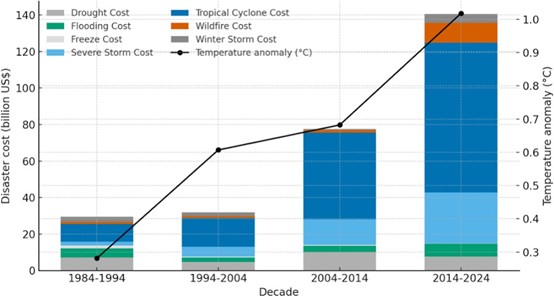
Figure 1. Rising costs of extreme weather events in the United States
over the last four decades. Disaster costs adjusted for inflation retrieved from
NOAA National Centers for
Environmental Information, (2025).
Across all four decades, U.S. disaster costs show a clear upward trend that positively correlates with rising U.S. temperature anomalies. While some hazards, such as droughts, winter storms, and freeze events, exhibit no visible patterns, the climate-sensitive hazards and their associated disaster costs have dramatically and consistently grown. Tropical cyclone costs rose sharply from under $10 billion in 1984–1994 to over $80 billion in 2014–2024, and severe storm costs increased more than ten-fold over the same period. Wildfire costs remained modest until the most recent decade, surging by nearly an order of magnitude. When all hazard types are included, total disaster costs grew from $22 billion to over $150 billion per decade (NOAA National Centers for Environmental Information, 2025). This escalation aligns with the increase in temperature anomalies from 0.28°C to 0.96°C, illustrating how warming amplifies the costly hazard categories.
Extreme weather events have a variety of social, microeconomic, and macroeconomic impacts. These events damage local services and sources of livelihood, destroy physical assets, and adversely affect humans' physical and mental health (Newman et al., 2024). Extreme weather events also have a multitude of short-term and long-term economic impacts that affect both disaster areas and surrounding areas. As a result, the full economic costs are extremely difficult to quantify and are often undercut (Newman et al., 2024). The results of Newman et al.s’ (2024) research determined that anthropogenic climate change contributed to 53% of total damages across 185 extreme weather events. This research provides insight into the complex relationship between climate change, economic costs, social costs, and extreme weather events, highlighting how human actions intensify climate change, and result in greater damages when extreme weather events occur.
Weitzman (2012) also argues that since the probability distribution of climate sensitivity is fat-tailed, the most serious climate damages, low-probability, high-impact outcomes, lie far in the tail of the distribution. He notes that “six degrees of extra warming is about the upper limit of what the human mind can envision for how the state of the planet might change,” (p. 226) and warns that warming on the order of 12°C “represents an extreme threat to human civilization and global ecology as we now know it,” (p 232). These warnings should be carefully considered when evaluating the Earth's current and future climate trajectory.
Extreme weather events in the United States result in significant economic costs, and these costs have been progressively increasing as the climate warms (NOAA National Centers for Environmental Information, 2025). Flooding associated with extreme precipitation, along with severe storms and tropical cyclones, represents just a few of the climate-sensitive hazards that negatively impact the economy and the livelihoods of American citizens (Newman et al., 2024). The climate of the United States is likely to continue warming, and as a result, sea temperatures will continue to rise, increasing the severity and cost of extreme weather events (Pendergrass and Hartmann, 2014). As highlighted by Sheng et al. (2024), severe weather shocks negatively impact output growth; however, in recent years, the macroeconomic impacts appear to be less substantial, potentially due to more efficient adaptation strategies. To conclude, there is a positive correlation between extreme weather events in the United States and increasing economic costs; a correlation that needs to be considered during economic policy development and when evaluating the cost–benefit ratio of mitigating climate change.
The author of this paper contributed to the concept, writing, and editing, and takes full responsibility for the paper’s content, accuracy, and integrity. Consensus AI was used for literature discovery. The table was created by ChatGPT after the author provided the data. All errors, biases, and omissions remain the author’s, not the AI tools.
I thank Professor Peter Tsigaris for his guidance, knowledge, and feedback; all remaining errors are my own.
Environmental Defense Fund. (2025). How climate change makes hurricanes more destructive. https://www.edf.org/climate/how-climate-change-makes-hurricanes-more-destructive
Myhre, G., Alterskjær, K., Stjern, C., Hodnebrog, Ø., Marelle, L., Samset, B., Sillmann, J., Schaller, N., Fischer, E., Schulz, M., & Stohl, A. (2019). Frequency of extreme precipitation increases extensively with event rareness under global warming. Scientific Reports, 9, 16063. https://doi.org/10.1038/s41598-019-52277-4
Newman, R., & Noy, I. (2023). The global costs of extreme weather that are attributable to climate change. CESifo Working Paper No. 10053, Available at SSRN: https://ssrn.com/abstract=4266618 or https://doi.org/10.2139/ssrn.4266618
NOAA National Centers for Environmental Information. (2025). U.S. billion-dollar weather and climate disasters [Time series]. https://www.ncei.noaa.gov/access/billions/time-series
Our World in Data. (n.d.). Annual temperature anomalies relative to the pre-industrial period [Data set]. https://ourworldindata.org/grapher/temperature-anomaly
Pendergrass, A., & Hartmann, D. (2014). Changes in the distribution of rain frequency and intensity in response to global warming. Journal of Climate, 27, 8372–8383. https://doi.org/10.1175/jcli-d-14-00183.1
Sheng, X., Gupta, R., & Cepni, O. (2024). Time-varying effects of extreme weather shocks on output growth of the United States. Finance Research Letters, 70, Article 106318. https://doi.org/10.1016/j.frl.2024.106318
U.S. Environmental Protection Agency. (2025, September 11). Climate change indicators: US and global temperature. https://www.epa.gov/climate-indicators/climate-change-indicators-us-and-global-temperature
Vose, R. S., Easterling, D. R., Kunkel, K. E., LeGrande, A. N., & Wehner, M. F. (2017). Temperature changes in the United States. In D. J. Wuebbles, D. W. Fahey, K. A. Hibbard, D. J. Dokken, B. C. Stewart, & T. K. Maycock (Eds.), Climate science special report: Fourth national climate assessment, Volume I (pp. 185–206). U.S. Global Change Research Program. https://ntrs.nasa.gov/api/citations/20180001314/downloads/20180001314.pdf
Weizman, M. L. (2012). GHG targets as insurance against catastrophic climate damages. Journal of Public Economic Theory, 14(2), 221–224. https://doi.org/10.1111/j.1467-9779.2011.01539.x

This work is licensed under a Creative Commons
Attribution-NonCommercial-ShareAlike 4.0
International license