
Online
ISSN 2819-7046
SPECIAL ISSUE: ECONOMICS OF CLIMATE
CHANGE
2026
Investigating the Economic Impact of Climate Change on B.C.’s Freshwater Fisheries
Thompson Rivers University
Freshwater fisheries play a critical ecological, cultural, and economic role in British Columbia (B.C.). Salmonid species such as Sockeye (Oncorhynchus nerka), Coho (Oncorhynchus kisutch), Chinook (Oncorhynchus tshawytscha), and Bull Trout (Salvelinus confluentus) contribute heavily to inland fisheries that sustain recreational angling, tourism, and Indigenous food sovereignty (Marushka et al., 2021). These fisheries contribute hundreds of millions of dollars to provincial GDP and local employment (GoFishBC, 2020; British Columbia Ministry of Agriculture and Food, 2022). Yet the future of these fisheries remains uncertain as climate change accelerates warming, alters hydrology, and reshapes species distributions. This commentary argues that climate-driven ecological change in freshwater systems will significantly reduce the economic value and reliability of B.C.’s inland fisheries through declining catch potential and rising management costs.
Cold-water species such as Bull Trout are highly temperature sensitive, and modelling suggests they could lose up to 95% of their range under projected warming scenarios (Price & Daust, 2016). Anadromous salmon species, including Coho, Sockeye, and Chinook, depend on cool, oxygen-rich freshwater habitat for spawning and rearing. These habitats face rising water temperatures, lower flows, and degraded water chemistry (Price, 2016). The Pacific Salmon Foundation (2021) predicts that such changes will increase pre-spawn mortality and create migration barriers, limiting population stability.
Ecological decline is directly linked to economic vulnerability. Freshwater ecosystems globally contribute immense economic value with estimates suggesting that freshwater lakes alone provide trillions of dollars in annual ecosystem and economic services, emphasizing their importance in B.C. (Li & Tsigaris, 2024a). British Columbia contains more than 2.2 million hectares of lakes, providing ecosystem-service values totaling tens of billions of dollars annually (Li & Tsigaris, 2024b). The Freshwater Fisheries Society of B.C. estimates that recreational freshwater angling contributes $299 million annually to provincial GDP (GoFishBC, 2020). As temperatures rise, many interior rivers are now periodically closed during summer due to heat and low oxygen levels, reducing tourism revenue. U.S. evidence shows that warming freshwater systems shrink cold-water fish habitat and generate substantial losses in recreational spending and local economic activity (Jones et al., 2012; Lane et al., 2015; Cline et al., 2022).
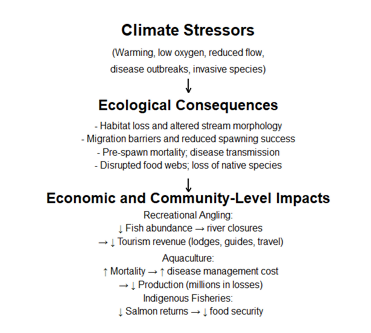
Figure 1. Climate-driven freshwater stress
leads to ecological impacts—such as habitat loss, migration barriers, and mortality—that in turn reduce
fisheries, tourism revenue, aquaculture productivity, and Indigenous food security. Created with Rstudio
Long Description
Although province-specific loss estimates are not yet available, the combination of U.S. evidence and B.C.’s strong dependence on cold-water lake ecosystems makes it clear that warming poses a major economic risk for the region. Even a 10% decline in the ecological or recreational services associated with these systems, arising from habitat loss, warmer waters, disease, or reduced salmonid survival, would translate into annual losses in the billions of dollars given the valuation of freshwater lakes in British Columbia by Li and Tsigaris (2024b).
Similarly, aquaculture operations worth roughly $400 million to B.C.’s economy face increased disease risk and production losses (British Columbia Ministry of Agriculture and Food, 2022). The Indigenous Fisheries Secretariat (2021) reports that Indigenous fishing enterprises generate approximately $160 million annually in revenue and support 2,800 jobs nationwide, while Marushka et al. (2021) show that fish remain a critical food source for many First Nations, linking ecological decline directly to community well-being. As stocks decline, management costs, such as hatchery production, monitoring, and habitat restoration, are expected to rise sharply, placing additional strain on public budgets and conservation programs.
Beyond economic losses, climate stress contributes to biodiversity decline. Freshwater vertebrate populations have declined 84% globally since 1970, and the ecological services these ecosystems provide, estimated at more than $4 trillion USD annually, are rapidly declining (World Wide Fund for Nature, 2020; Flitcroft et al., 2019). Warming waters also promote invasive species, disrupt predator-prey dynamics, and increase mortality during migration and spawning (Dudgeon, 2019). Historical data on the Fraser River project a 1.8°C temperature increase within 50 years, which may prevent upstream migration for species such as Sockeye salmon (Price, 2016). These pressures collectively threaten the sustainability of salmonid populations that drive both cultural identity and economic opportunity across the province.
| Climate-Induced Stressor | Ecological Impact | Economic Implication |
|---|---|---|
| Increased water temperatures | Reduced dissolved oxygen concentrations | Reduced survival, angling, and overall catch |
| Reduced streamflow | Increased barriers to migration and habitat loss | Reduced tourism, conflicts over water allocation |
| Disease and parasites | Increased mortality and pre-spawn death | Higher hatchery, restoration, and management costs |
| Invasive species | Competition, altered food webs | Reduced native species and cultural/economic value |
Adaptation will require targeted conservation of cold-water refugia, riparian restoration, and the integration of Traditional Ecological Knowledge (TEK) into fisheries management. Strengthening partnerships with Indigenous Nations will be vital in ensuring that stewardship practices and habitat protection reflect local values and long-term sustainability goals. Without coordinated action, ecological degradation will contribute to diminished biodiversity and weaken the economic foundation of B.C.’s freshwater fisheries. Preserving fish populations in a climate-altered world is an investment in provincial economic stability, as well as reconciliation and biodiversity conservation.
The author contributed to the concept, writing, and editing of this commentary and takes full responsibility for its content, accuracy, and integrity. The author declares using ChatGPT as a tool that provided insights into the topic and supported readability and appropriate language. All errors, biases, and omissions remain the author’s, not the AI tools.
British Columbia Ministry of Agriculture and Food. (2022). British Columbia’s fisheries and aquaculture sector: 2022 edition [PDF]. Government of British Columbia. https://www2.gov.bc.ca/assets/gov/farming-natural-resources-and-industry/agriculture-and-seafood/statistics/industry-and-sector-profiles/sector-reports/four_sector_report_2022_edition.pdf
Cline, T. J., Muhlfeld, C. C., Kovach, R. P., Al-Chokhachy, R., Schmetterling, D. A., Whited, D. C., & Lynch, A. J. (2022). Socioeconomic resilience to climatic extremes in a freshwater fishery. Science Advances, 8(31), eabn1396. https://doi.org/10.1126/sciadv.abn1396
Dudgeon, D. (2019). Multiple threats imperil freshwater biodiversity in the Anthropocene. Current Biology, 29(19), R960–R967. https://doi.org/10.1016/j.cub.2019.08.002
Flitcroft, R., Cooperman, M. S., Harrison, I. J., Juffe-Bignoli, D., & Boon, P. J. (2019). Theory and practice to conserve freshwater biodiversity in the Anthropocene. Frontiers in Environmental Science, 7, 54. https://doi.org/10.3389/fenvs.2019.00054
GoFishBC. (2020). Economic impact of recreational fishing in British Columbia: 2020 summary report [PDF]. Freshwater Fisheries Society of B.C. https://www.gofishbc.com/wp-content/uploads/2023/06/Economic-Impact-Report-2020-Summary.pdf
Indigenous Fisheries Secretariat. (2021). Compendium of Indigenous socio-economic best practices [PDF]. Indigenous Fisheries Secretariat. https://indigenousfisheries.ca/en/wp-content/uploads/2021/05/Compendium-of-Indigenous-Socio-economic-Best-Practises_March-2021.pdf
Jones, R., Travers, C., Rodgers, C., Lazar, B., English, E., Lipton, J., Vogel, J., Strzepek, K., & Martinich, J. (2012). Climate change impacts on freshwater recreational fishing in the United States. Mitigation and Adaptation Strategies for Global Change, 18(6), 731–758. https://doi.org/10.1007/s11027-012-9385-3
Lane, D. E., Jones, R. N., Mills, D., Wobus, C., Ready, R., Buddemeier, R., English, E., Martinich, J., Shouse, K., & Hosterman, H. (2015). Climate change impacts on freshwater fish, coral reefs, and related ecosystem services in the United States. Climatic Change, 131(1), 143–157. https://doi.org/10.1007/s10584-014-1107-z
Li, X., & Tsigaris, P. (2024a). The global value of freshwater lakes. Ecology Letters, 27, e14388. https://doi.org/10.1111/ele.14388
Li, X., & Tsigaris, P. (2024b). Lakes in British Columbia. In P. Tsigaris, A. Adewunmi, T. M. Akinosho, M. Butler, A. L. Castro, B. V. Del Rosario, I. Fernando, C. Ikegwu, N. Kunwar, X. Li, S. S. Natea, O. Onasile, S. J. Oudith, S. E. Paul, Y. Rathnayake, & G. Shema (Eds.), The value of lakes around the Secwépemc territory. Thompson Rivers University Open Press. https://thompsonokanaganlakes.pressbooks.tru.ca/chapter/lakes-in-british-columbia/
Marushka, L., Batal, M., Tikhonov, C., Sadik, T., Schwartz, H., Ing, A., Fediuk, K., & Chan, H. M. (2021). Importance of fish for food and nutrition security among First Nations in Canada. Canadian Journal of Public Health, 112(Suppl 1), 64–80. https://doi.org/10.17269/s41997-021-00481-z
Pacific Salmon Foundation. (2021). Climate change and salmon: Understanding impacts and identifying solutions [PDF]. Pacific Salmon Foundation. https://psf.ca/wp-content/uploads/2021/10/Download-PDF806-1.pdf
Price, K., & Daust, D. (2016). Climate change vulnerability of BC’s fish and wildlife species – First approximation [PDF]. British Columbia Ministry of Forests, Lands and Natural Resource Operations. https://www2.gov.bc.ca/assets/gov/environment/natural-resource-stewardship/nrs-climate-change/adaptation/climate20change20vulnerability20of20bcs20fish20and20wildlife20final20june6.pdf
Price, K. (2016). Climate change vulnerability and adaptation in freshwater aquatic ecosystems in British Columbia [PDF]. British Columbia Ministry of Environment. https://www2.gov.bc.ca/assets/gov/environment/climate-change/adaptation/resources/freshwater_vulnerability_bcmoe_2016.pdf
World Wide Fund for Nature. (2020). Living Planet Report 2020: Bending the curve of biodiversity loss [PDF]. WWF International. https://livingplanet.panda.org/
Figure 1: Conceptual flow diagram illustrating the pathway from climate stressors to ecological and economic impacts in freshwater fisheries.
At the top, climate stressors include warming water temperatures, low oxygen levels, reduced streamflow, disease outbreaks, and invasive species.
These stressors lead to ecological consequences, including habitat loss and altered stream morphology, migration barriers and reduced spawning success, increased pre-spawn mortality and disease transmission, and disrupted food webs that contribute to the loss of native species.
These ecological changes then produce economic and community-level impacts. In recreational angling, reduced fish abundance can lead to river closures and decreased tourism revenue from guides and travel-related services. In aquaculture, increased fish mortality raises disease management costs and can lead to production losses. For Indigenous fisheries, declining salmon returns threaten food security and cultural practices connected to fishing.
The diagram shows a cascading relationship in which climate-driven environmental stress leads to ecological degradation, which then affects fisheries-dependent economies and communities.
Back to Figure 1

This work is licensed under a Creative Commons
Attribution-NonCommercial-ShareAlike 4.0
International license